
Sharing a Static Secret
Deeper DiveFor more in-depth information, check out our detailed documentation on the following topics:
Static Secrets
Need any help?If something in this tutorial isn't working as expected, feel free to contact our support team via Slack.
Below is a text-only guide for users based on the above video
Why Share a Secret?
Static Secrets can be shared between users within an organization and even outside an organization. The user receiving the secret doesn’t need to register for an Akeyless account either. This can be helpful if you just want to give someone credentials for a specified amount of time and only to their email address.
You can accomplish this with the Akeyless Console or via the CLI.
Share a Static Secret via the UI
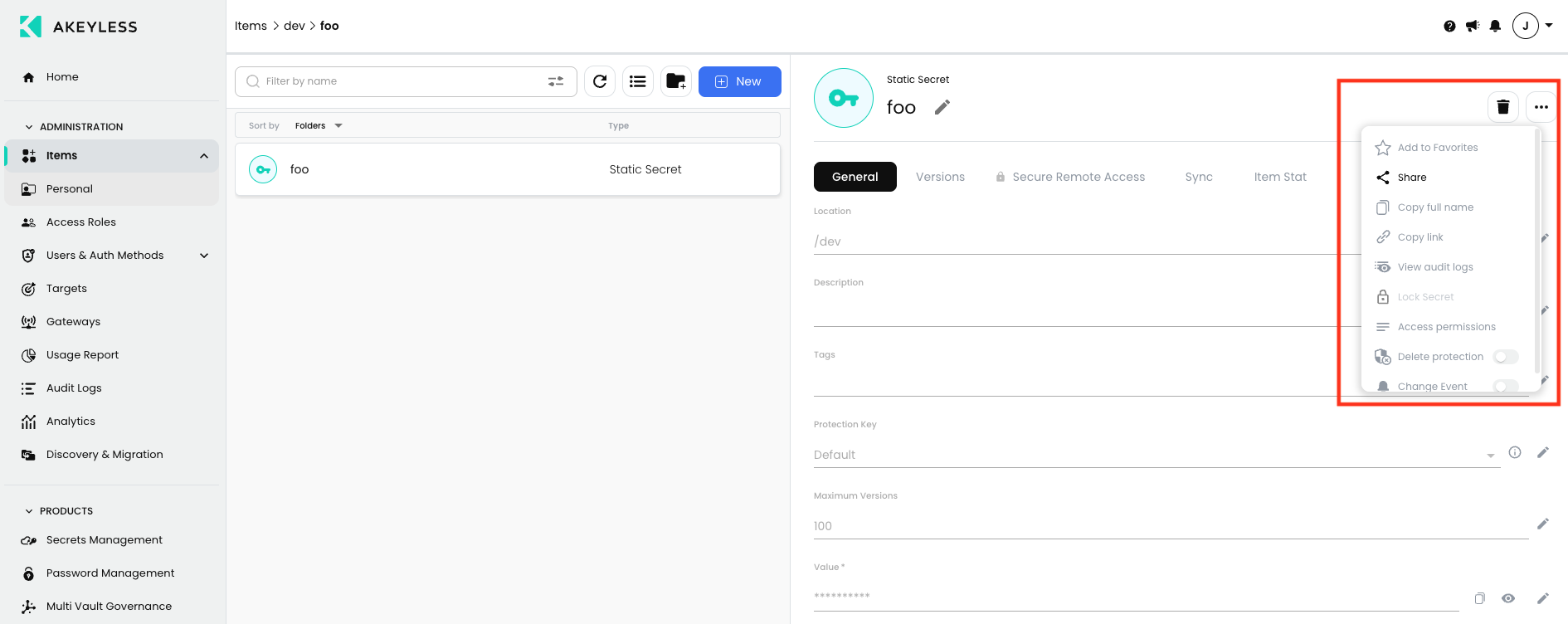
Choose your secret, click on the three dots, and then "Share".
Share via Email
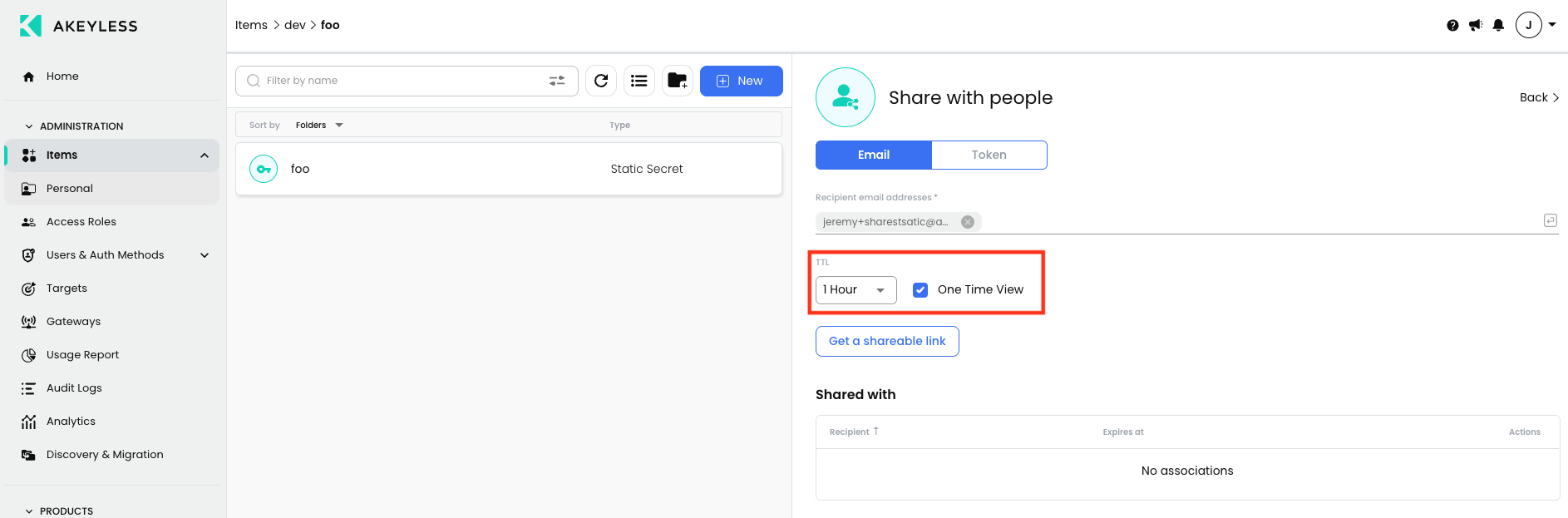
Enter the email address you wish to share the Secret with and you can choose the length of time the secret will be available for as well. Then click ‘Get a shareable link’.
One time viewThe "One time view" tick box enables the user receiving the link to open it only once. After that, the link will expire and will not have the ability to be accessed again.
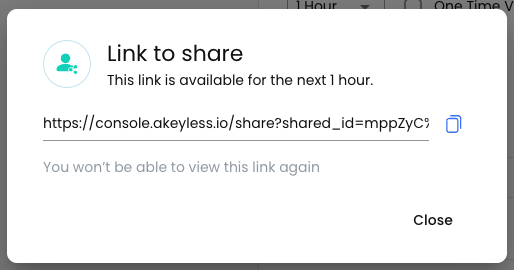
You will be given a link to share. Share that with the user with whom you have given access.
When that user opens the link, it will lead them to a page to enter and confirm their email address.
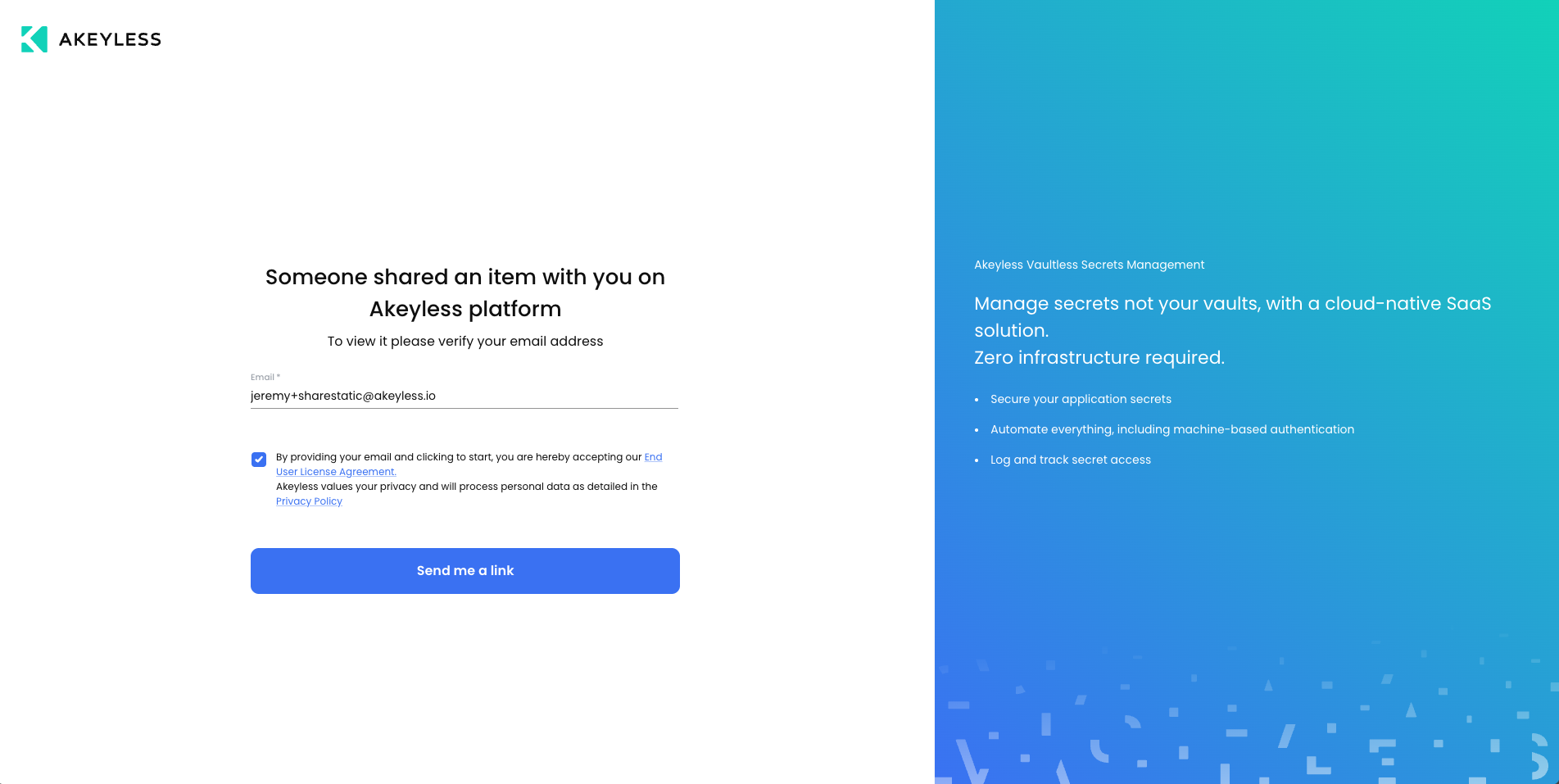
Once clicked, the system will send an email to the user with a link to open and view the secret.
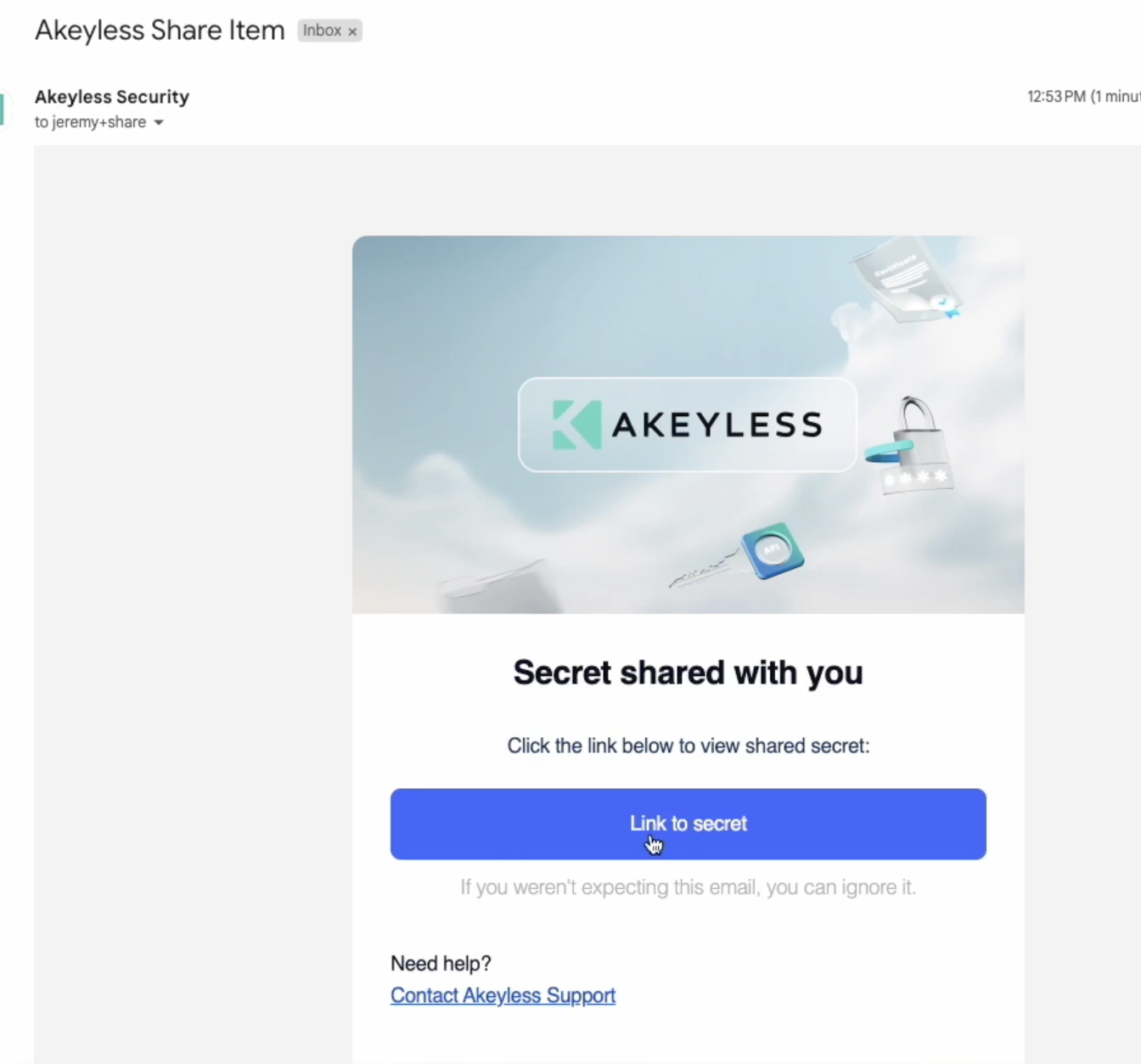
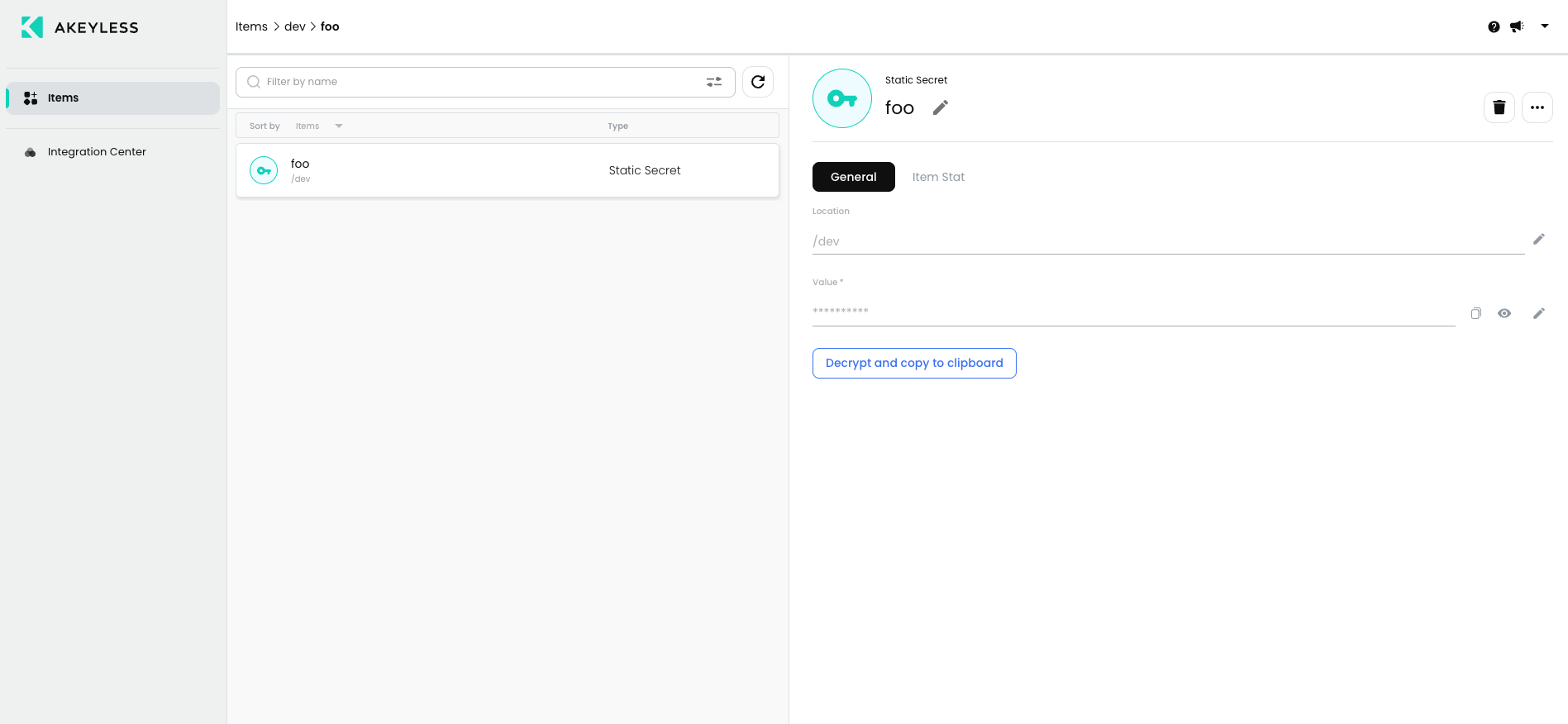
The Akeyless web console will open up for the user and they will be able to view the secret but without access to anything else in the platform.
Share via CLI
Secrets can also be shared via the CLI by running the “share item command” and you will see a sharing_url. You can share that link in the same way.

Share via Token
Another method for sharing secrets is using a Token. When sharing a secret choose the Token option.
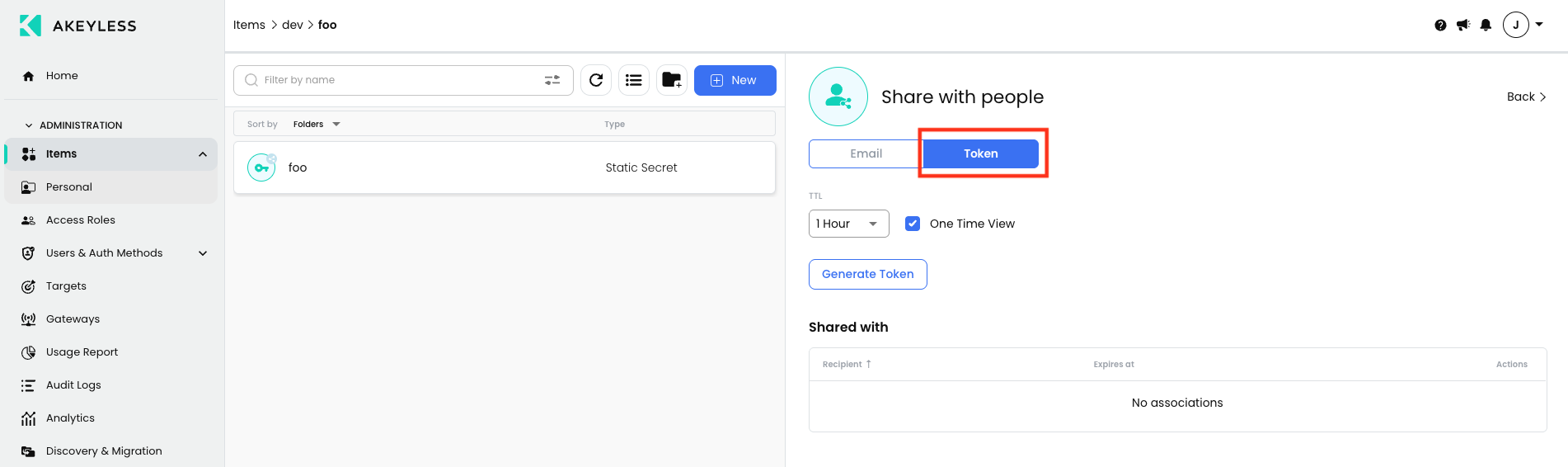
Click the Generate Token button and you will be presented a token on your screen. Copy that token and send it to the recipient.
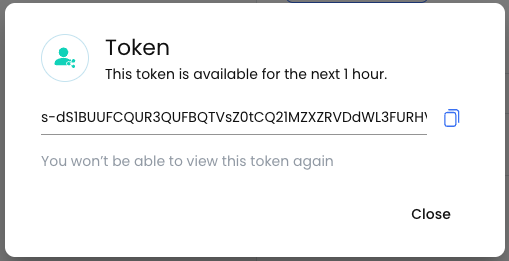
The recipient can then use the unwrap-token command to unwrap the token and get the secret value.

Updated 15 days ago