
Authentication Methods & Creating an API Key
Deeper DiveFor more in-depth information, check out our detailed documentation on the following topics:
Authentication MethodsAPI Key Authentication
Need any help?If something in this tutorial isn't working as expected, feel free to contact our support team via Slack.
Below is a text-only guide for users based on the above video
What is an Authentication Method?
An Authentication Method is the mechanism that a human or machine uses to prove they are who they say they are in order to access a service. In our case we're talking about accessing secrets and other sensitive data. Workloads and humans interact with Akeyless using various methods including the web console, browser extension, CLI, or SDKs.
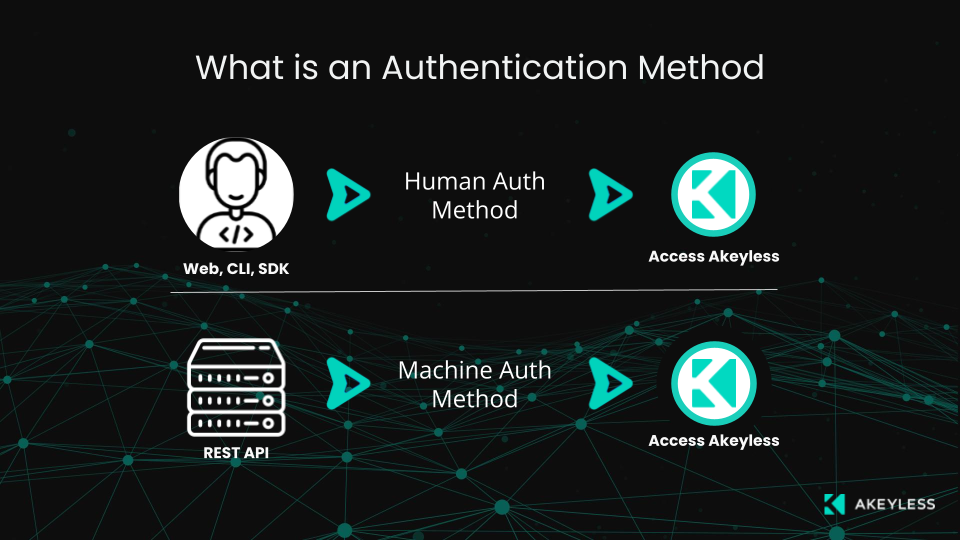
There is a wide range of authentication methods that can be used together with role-based access controls in order to ensure clients are granted access to the specific secrets they need.
These include CSP IAM, Kubernetes, Certificates, OAuth, API Keys, Kerberos, LDAP, SAML, OIDC, Email, and On-prem machines with Akeyless Universal Identity.
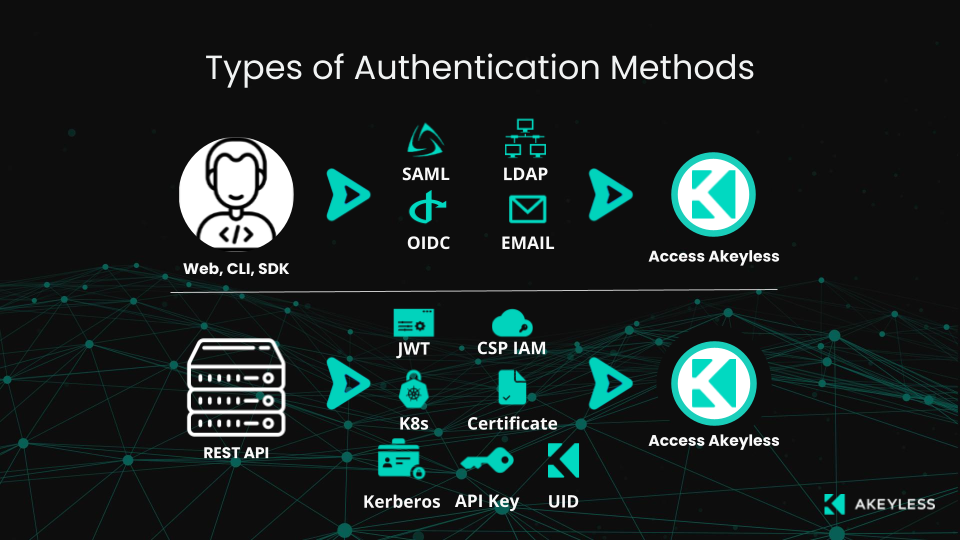
In this example, we will demonstrate creating a simple API Key.
Create an API Key via the UI
First, click Users & Auth Methods in the left-side menu.
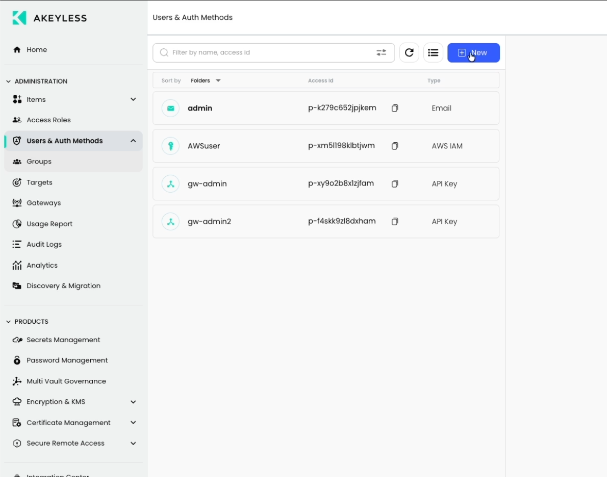
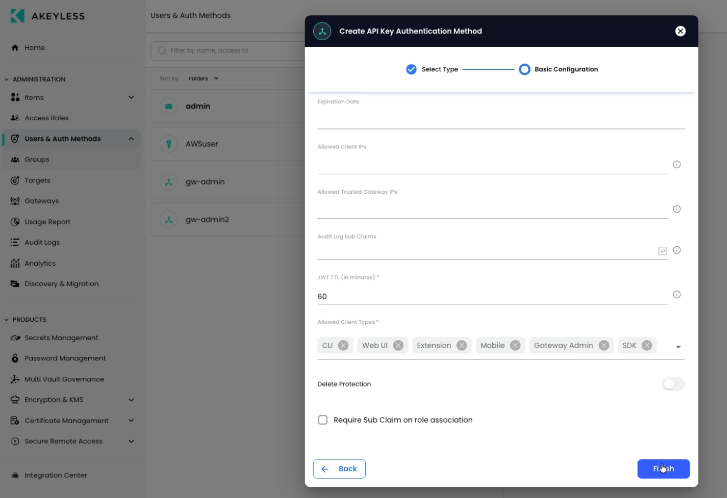
Then click New and choose API Key.
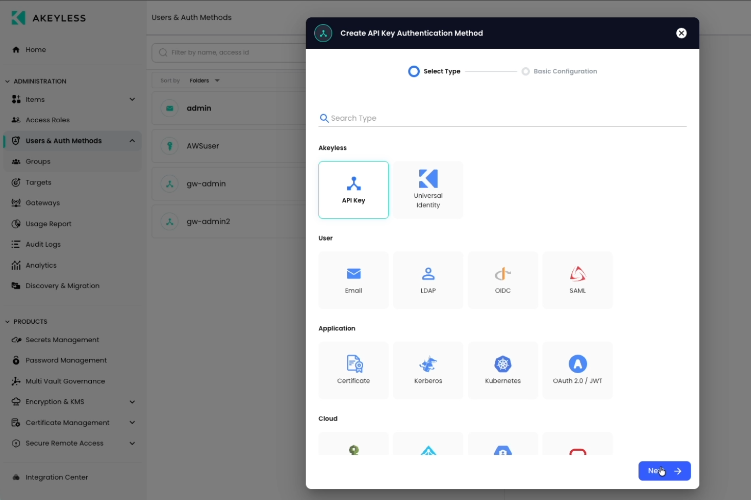
Choose your API Key Auth Method name and click ‘Finish’ at the bottom.
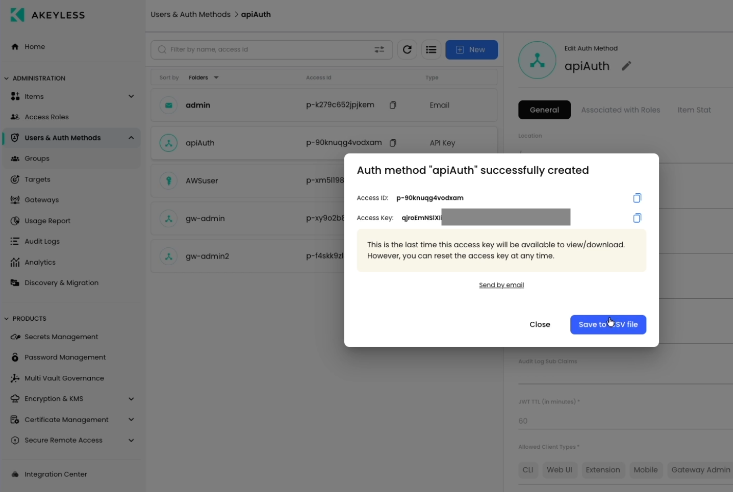
Once you have created the Auth Method, you will be shown a screen with your Access ID and Access Key. Save this information in a safe place for later use.
Create an API Key via the CLI
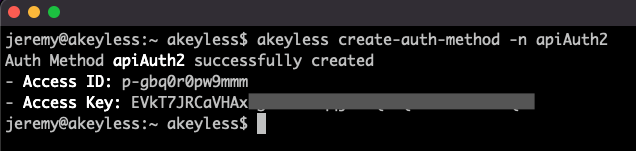
Now, let’s create an API Key via the CLI. Run the command below from the terminal:
akeyless create-auth-method -n [name]You will be given an Access ID and Access Key on the screen. Save this information in a safe place for use.
Updated about 1 month ago